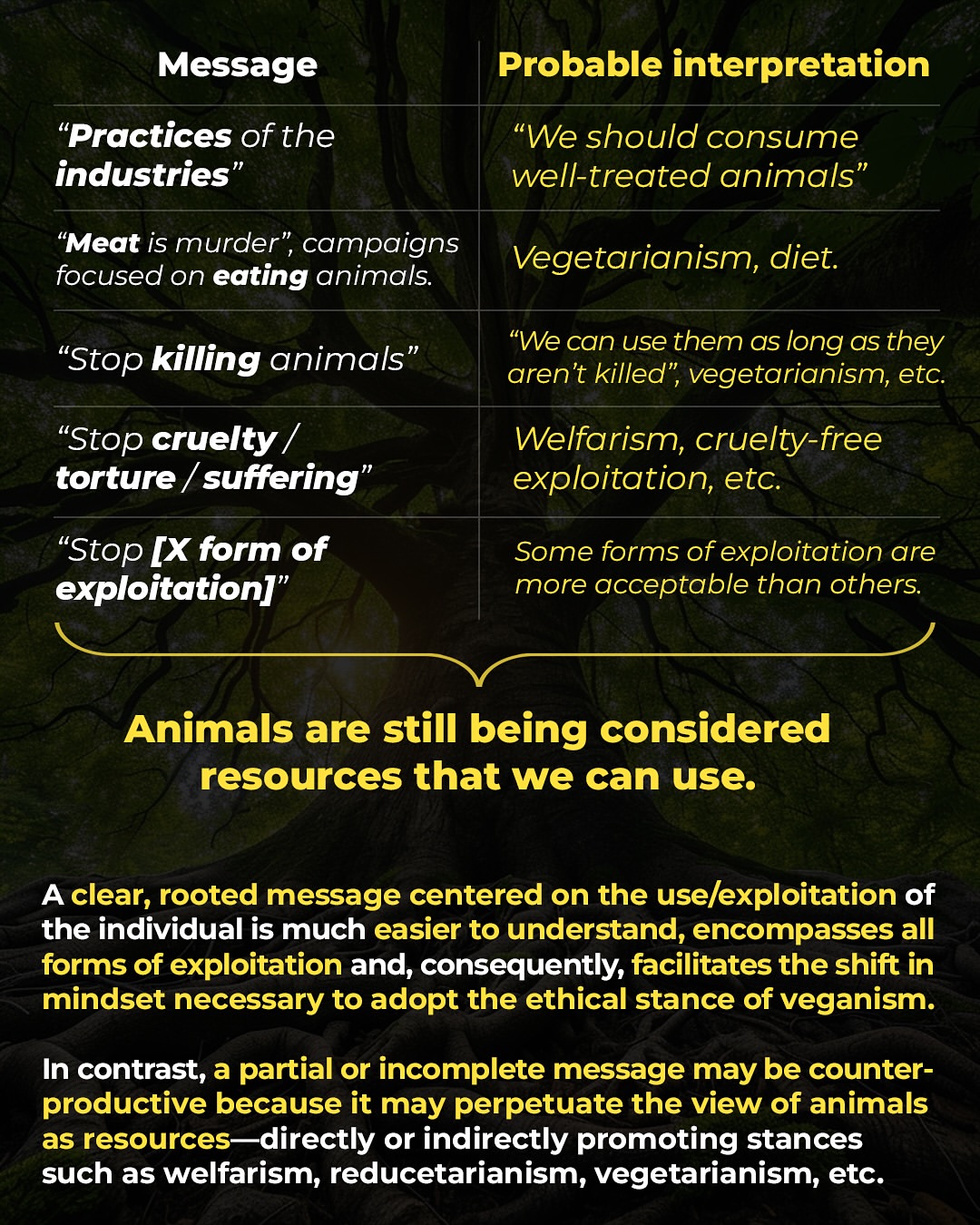
When searching for positive outcomes, it's common to resort to strategies with "more accessible" or "higher-impact" messages. For example, focusing on eliminating meat consumption, zoos or "fur", to only later try to eliminate less visible forms of animal exploitation. Or focusing on the suffering, cruelty, and torture of certain practices that everyone rejects, and later try to fight against the exploitation of well-treated animals. Or just trying to "approach from other angles" and focus on the benefits to humans of not consuming animals, such as those for health or the environment. Or focusing on "plant-based alternatives" and hope that people will change their mindset toward animals thanks to a burger.
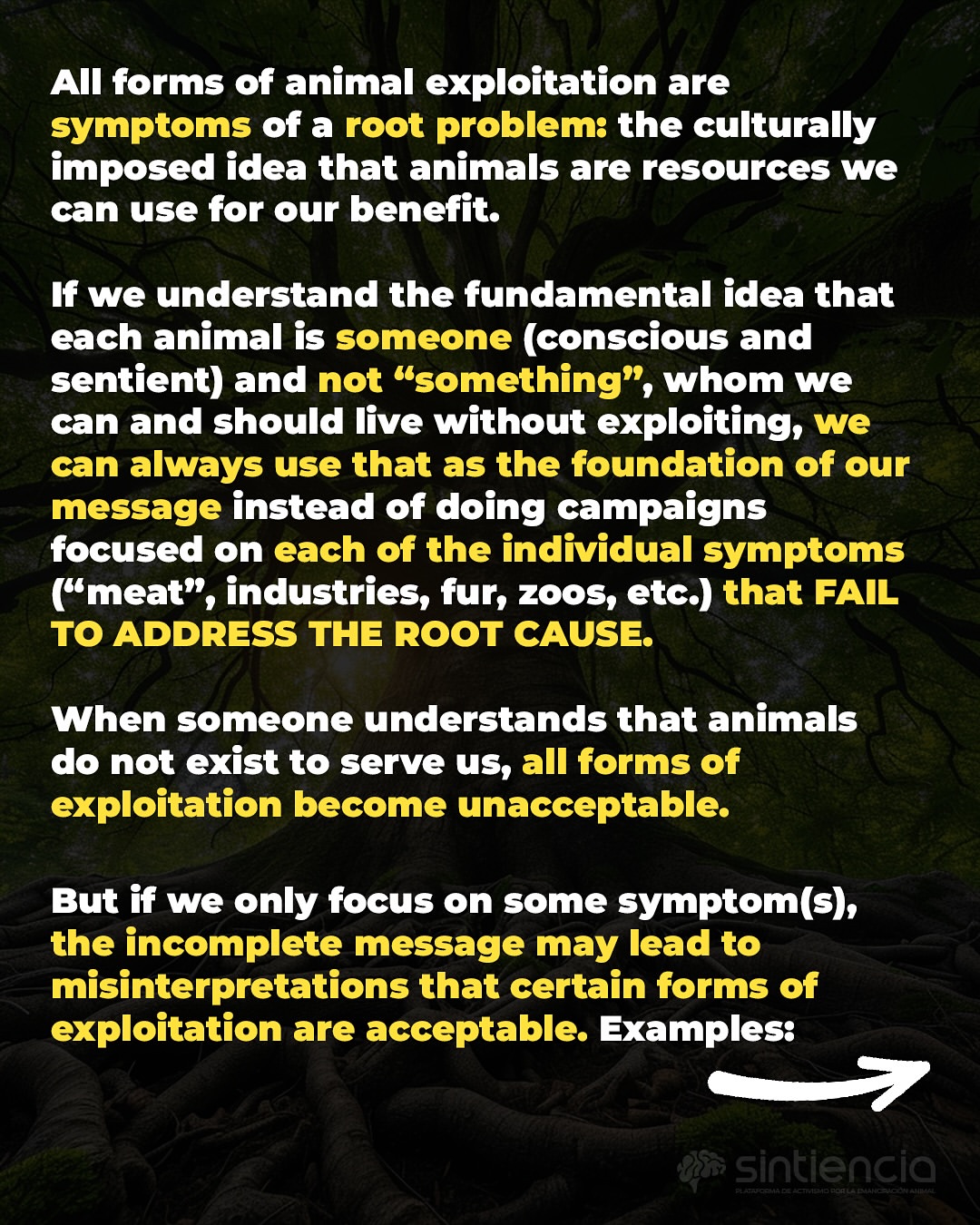
Even with the best intentions, these strategies can be counterproductive IF THE GOAL IS THE ABOLITION OF ANIMAL EXPLOITATION. And this is crucial. If the goal were something else (such as "reducing suffering" or "improving welfare"), these strategies could be useful. But if the goal is abolition (which is the specific goal of veganism), they can be problematic because they DON'T ADDRESS THE ROOT PROBLEM:
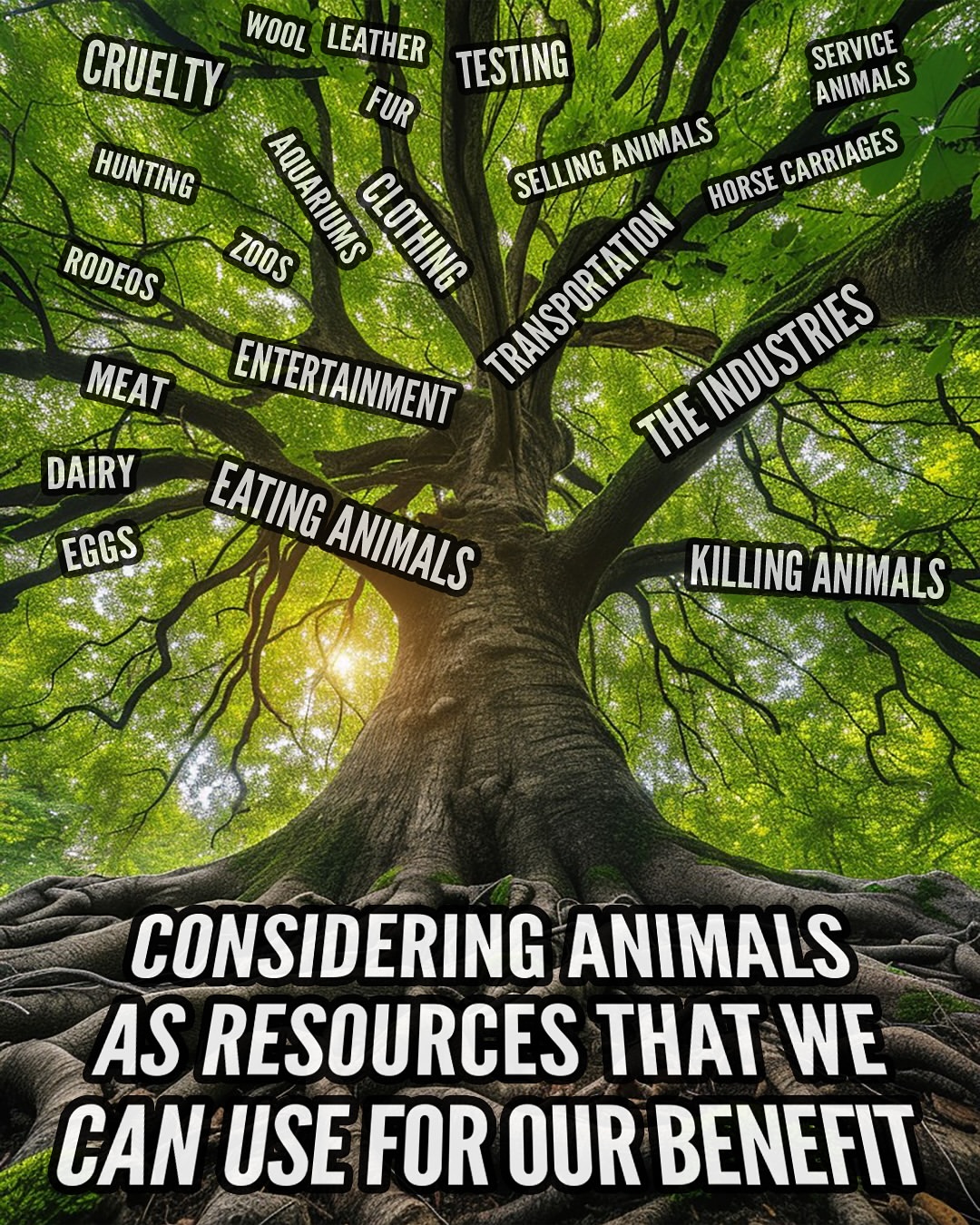
A person who stops consuming animals because of "the cruelty of the industries" may end up consuming animals from "happy farms" or using animals in other ways if they maintain the MINDSET THAT ANIMALS ARE USABLE RESOURCES. AS LONG AS THIS MINDSET REMAINS UNBROKEN, we perpetuate their objectification. The path to abolition inevitably requires people to understand that every animal is someone who isn't here to serve us, and that using them as resources is UNACCEPTABLE. And this message is as simple—if not simpler—to understand than any of the strategies that end up causing the existing massive confusion.
Changes in behavior are only sustainable as a result of a change in mindset. And the strategy of getting people to change their mindset by taking small, progressive steps is unrealistic if that mindset isn't questioned.
"But we must accept a plurality of styles!" Of course! We can deliver a clear, root-focused message through all types of campaigns, formats and styles, adapted to all types of audiences, without compromising the core principle.